
Oxygen Machine for Sleeping: Can It Help with Sleep Apnea for Malaysians in 2026?
Index

Introduction 🩺
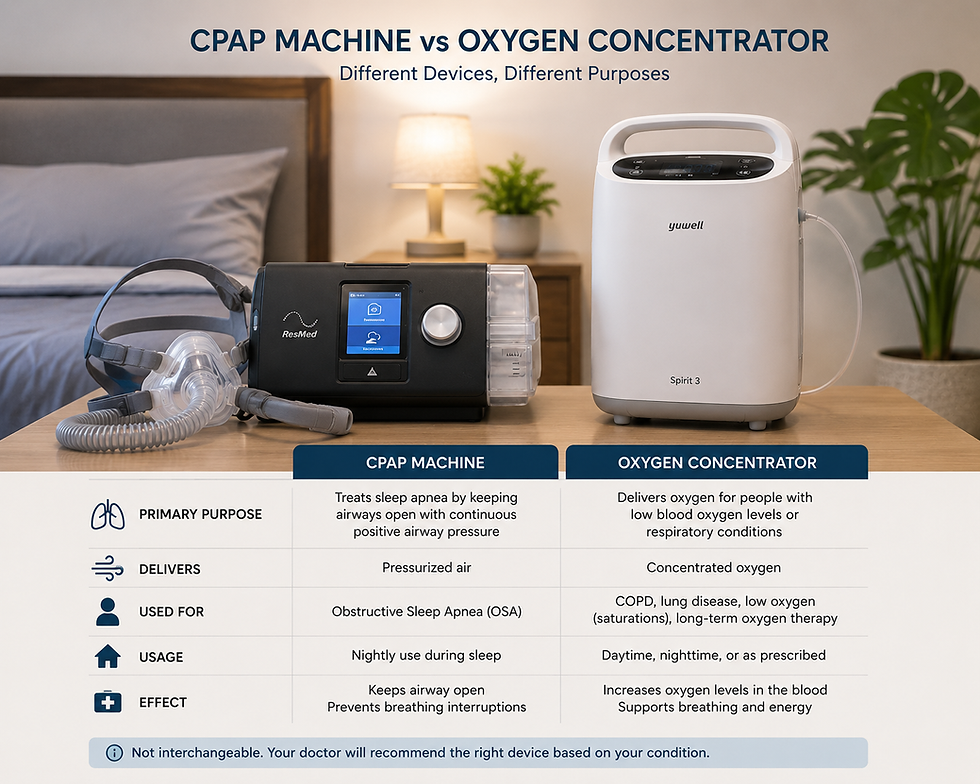
An oxygen machine can help some patients at night, but it is not the standard first-line treatment for most people with obstructive sleep apnea.
That is the most important point to understand before renting or buying one.
Many people hear “low oxygen during sleep” and assume that an oxygen concentrator must be the answer.
But sleep apnea usually involves repeated breathing interruptions or airway collapse during sleep. In most cases, the main treatment focus is keeping the airway open, not simply adding more oxygen. NHLBI says breathing devices such as CPAP machines are common sleep apnea treatments. (nhlbi.nih.gov)
This guide explains when an oxygen machine may help, when it may not, and what Malaysians should check before using one for sleep.
What Is Sleep Apnea? 😴
Sleep apnea is a condition in which breathing repeatedly stops or becomes too shallow during sleep.
NHLBI describes sleep apnea as a disorder that can disrupt sleep quality and reduce the oxygen your body gets during the night. Common treatment options include CPAP and lifestyle changes, while some people may need other medical interventions depending on the cause. (nhlbi.nih.gov)
The two broad patterns people often hear about are:
obstructive sleep apnea (OSA), where the airway becomes blocked during sleep
central sleep apnea (CSA), where breathing control from the brain is affected
That distinction matters because not every patient benefits from the same device or approach.
What Is an Oxygen Machine for Sleeping? 🌬️
In most home-care conversations, an “oxygen machine” means an oxygen concentrator.
WHO explains that oxygen concentrators deliver concentrated oxygen from room air. These machines are designed to provide supplemental oxygen, not to mechanically keep the airway open. (nhlbi.nih.gov)
So if someone is asking whether an oxygen machine can help with sleep apnea, the real question is usually this:
Does the patient need supplemental oxygen, or do they actually need airway support such as CPAP?
Can an Oxygen Machine Help with Sleep Apnea? ⚖️
Simple answer: sometimes, but usually not as a replacement for standard sleep apnea treatment.

Why CPAP Is Still the Main Treatment
For obstructive sleep apnea, CPAP remains the most common treatment according to NHLBI. Sleep Foundation also notes that positive airway pressure therapy is the most common and effective treatment for obstructive sleep apnea. (nhlbi.nih.gov)
This is because CPAP helps keep the airway open during sleep, which directly addresses the breathing interruption problem.
When Oxygen May Be Used
Nighttime oxygen may be considered in selected situations, but this should be based on medical assessment.
For example, oxygen may be discussed when a patient has:
documented low oxygen levels during sleep
another lung or breathing condition in addition to sleep apnea
a more complex respiratory picture that a doctor is managing
NHLBI guidance for obesity hypoventilation syndrome notes that some patients may need a CPAP machine or another breathing device at night to help keep the airways open and increase blood oxygen levels. That shows oxygen-related problems during sleep may sometimes be part of a bigger treatment plan, not a stand-alone DIY decision. (nhlbi.nih.gov)

Why Oxygen Is Not a Simple Replacement for CPAP
Oxygen may improve oxygen saturation in some situations, but it does not directly solve the airway collapse that causes obstructive sleep apnea.
A systematic review in PubMed Central found that oxygen therapy can improve oxygen saturation in OSA, but it may also increase the duration of apnea-hypopnea events. That is one reason oxygen is not treated as a simple substitute for CPAP. (pmc.ncbi.nlm.nih.gov)
So if a Malaysian patient has suspected or diagnosed sleep apnea, the safest message is this:
Do not assume that an oxygen machine alone will fix the problem.
Who Should Ask a Doctor Before Using Oxygen at Night? 👨⚕️
Anyone thinking about using oxygen while sleeping should ask a doctor first, but this is especially important for:
people with diagnosed or suspected sleep apnea
asthma patients with nighttime symptoms
COPD or other chronic lung disease patients
elderly patients with multiple breathing conditions
anyone who has not had a sleep study or oxygen assessment
This matters because the right device depends on the cause of the nighttime breathing problem, not just the symptom of feeling breathless.
What Should Malaysians Check Before Renting or Buying an Oxygen Machine for Sleeping? 📋
Before renting or buying an oxygen machine for sleep use, check these first:
whether a doctor actually prescribed home oxygen
whether the patient has sleep apnea, another lung condition, or both
whether the flow rate and machine type fit the prescription
whether CPAP or another breathing device was recommended instead
whether the machine is meant for home oxygen support, not life support
For travel or portable use, FAA guidance also reminds users that portable oxygen concentrators require battery planning and must meet applicable airline rules. (nhlbi.nih.gov)
Did You Know? 👀
CPAP is still the most common treatment for sleep apnea. NHLBI lists breathing devices such as CPAP as common sleep apnea treatments. (nhlbi.nih.gov)
Oxygen can improve oxygen levels without fixing the airway blockage itself. That is why oxygen is not usually treated as a simple replacement for CPAP in OSA. (pmc.ncbi.nlm.nih.gov)
Some nighttime breathing problems involve more than sleep apnea alone. Conditions like obesity hypoventilation syndrome may require a broader treatment plan. (nhlbi.nih.gov)
FAQ ❓
1. Can an oxygen concentrator cure sleep apnea?
No. An oxygen concentrator does not cure sleep apnea. It may help with oxygen levels in selected cases, but it does not directly fix the airway collapse seen in obstructive sleep apnea. (pmc.ncbi.nlm.nih.gov)
2. Is CPAP better than oxygen for sleep apnea?
For most people with obstructive sleep apnea, CPAP is the standard treatment because it helps keep the airway open during sleep. (nhlbi.nih.gov)
3. Can asthma patients use an oxygen machine while sleeping?
Only if a doctor has prescribed oxygen. Asthma symptoms at night do not automatically mean a patient needs an oxygen concentrator.
4. When might a doctor add oxygen at night?
A doctor may consider nighttime oxygen when there is documented low oxygen during sleep or another lung-related problem as part of a broader treatment plan.
5. Should I rent an oxygen machine before doing a sleep study?
Usually, it is better to get proper assessment first. A sleep study or medical review helps clarify whether the problem is sleep apnea, low oxygen from another cause, or something that needs CPAP instead.
Conclusion ✅
An oxygen machine can help some patients at night, but it is not the standard answer for most people with sleep apnea.
For Malaysians in 2026, the safer approach is to find out why breathing is disturbed during sleep before choosing equipment.
If the issue is obstructive sleep apnea, CPAP is still the main treatment in most cases. If the issue includes documented low oxygen or another lung condition, a doctor may decide that nighttime oxygen also has a role.
The smartest next step is medical assessment first, equipment second.


Comments